20 August 2008

Brutus writes about Naked

Back in April, there was a team of very nice and gracious Japanese photographers on Naked's 2nd floor. I knew it had something to do with a "cool offices" piece they were working on for a magazine, but I didn't have much other information. Well, today we were sent a copy of Brutus Magazine:
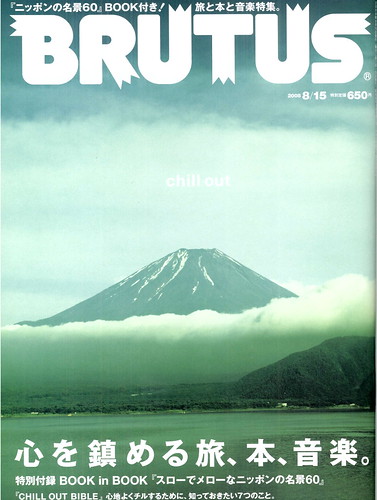
Brutus Magazine

You can click on the images to blow up, but unless you can read Japanese characters (help me out with this at least: is this Hiragana or Katakana? Or KANJI?), all you'll be able to understand is that they called us a World Hip Office.

If you do choose to click, you can see me on one of the couches in photo #3. Hooray, this is the second time I have been in a Japanese magazine (barely any American ones, though)!

"World Hip Offices"

We e-mailed our friends at Naked Tokyo for help in translating the article. Until then, enjoy the photography (^_^)//

x-posted to House of Naked.

10 comments:

  1. Hiragana, katakana and kanji are used on this 2 pages... ^^

    I simplify but most complicated characters are kanji. Simple character with curved shapes are hiragana , and simple character with angular shape are katakana...

    Sorry for my poor english, it's not my nativ langage.

    ReplyDelete
  2. Thank you, Goshu! I was confused because some of the characters looked like Kanji. I didn't know the difference between Katakana and Hiragana. Thank you so much, this helps ^^

    ReplyDelete
  3. Another tidbit - Katakana is most often used to write English words (and other foreign words) in Japanese. Or to somtimes translate hard to read kanji.

    ReplyDelete
  4. The text at the bottom of the cover reads

    心を静める旅、本、音楽。
    kokoro wo shizumeru tabi, hon, ongaku.

    Quell your heart travel, books, music.

    Depending on how it's rendered, if you were going for a "Conde de Naste" style by-line, it might read "Travel, books and music to quench your soul."

    Goshu was on the money, although no katakana appears above, only kanji and hiragana. Can you guess which parts are hiragana?

    ReplyDelete
  5. Oh that's awesome, thanks jrfiction! I can actually tell the difference between Kanji and Hiragana, but didn't quite know what Katakana looked like. I also didn't know that it was okay to combine characters like that, so I was soooo confused as to what this was! In my semi-ignorant American mind, Kanji looks more like Chinese characters to me, and the Hiragana seem to be curvier and have fewer strokes.

    ReplyDelete
  6. Maybe i didn't understand correctly. Right, no katakana on 心を静める旅、本、音楽。But under this line, we'can read : スロー or メロー. This characters are katakana. And i thought Johanna ask "on this pages, is this Hiragana or Katakana? Or kanji?"...

    Kanji are Chinese character imported in Japan in 4th century. But maybe Wikipedia can tell you more about kanji... :p

    ReplyDelete
  7. Oh I understand now! I was having trouble picking out Katakana until you showed me examples! What does スロー or メロー mean?

    Thank you to everyone :]

    Alexis, are you the Alexis who lived in Japan and I went to university with for a semester or two??

    ReplyDelete
  8. Johanna, that's me! I found your blog randomly a few years ago. I love the topics you write about and your writing style, so I bookmarked you and stayed around. I wish I wrote so well.

    I am a graphic designer in Raleigh, NC now. I don't have a blog - but you can find me on flickr :)

    ReplyDelete
  9. Oh my GOODNESS! It is so great to hear from you! Last we talked was nearly two years ago, I think, and then... well, MySpace has a way of jumbling things around I think. Do you have a Facebook? What is your Flickr address? You can email me at jbeyenbach at gmail if you prefer to not leave your information here. I'm so excited that it's actually you :D

    ReplyDelete
  10. スロー (suroo) is slow, and メロー (meroo) is mellow. ^^
    Like Alexis said, katakana is often used to write English words. :)

    ReplyDelete

Related Posts Plugin for WordPress, Blogger...