16 April 2026

cellar door, cont'd

By the time I came back and started writing again, I realized my last post (around 13 years ago) may have been around when Blogger stopped actively tending to the platform as much. I had all intentions of cozily staying in this familiar place, picking back up as if I'd never left, but I noticed the little paper cuts – strange UX where I'd get lost on my own blog; float-based wrapping leading to walls of emptiness when I'd try to fix it with my rusty CSS – started getting in the way of the writing, which was kind of it for me. 

For now, at least. I still hope I'll summon the time and energy to come back at some point and customize the heck out of it until it's frictionless again (is it possible? we'll see). 

Until then, you can find me at the very nice Pika; they seem good! I'll rifle through the cellar door 1.0 archives every now and then and rework some of my old favorites over there, but for the most part the stream will continue.

cellar door, cont'd


29 March 2026

Building a Vinyl Scrobbler (1 of ?)

I started using Last.fm in 2006 to log the songs I listened to, and was so in love with the data aggregation I'd write "what I listened to this year" posts to close out each year (like this one). For almost as long, I'd been wanting a way to auto-log the records I listened to - I dreamed of making the time to learn about and play with Shazam's API to get a version of vinyl scrobbling working. Fast forward twenty years, a lot of experimenting with Claude Code, and a successful personal project (also music related: a search bar for metal bands), and I finally got to work. I know vinyl scrobblers have been built a few times by now (like here, here, and here), but figuring out my options and building one very personal to me has been most of the fun.

After some time researching, I had three broad options:

  1. Log via audio recognition: So, turns out Shazam doesn't actually have an API, but there are similar APIs I could have either hooked up to an always-on mic, or trigger by pressing a button, holding my phone near the speaker, and waiting for match. I didn't like either option - creepy or too many steps, respectively - so this one was out pretty quickly.
  2. Log via sensors: Waving a record by a sensor could log an album as I put it on. This one would feel the most magical, but would involve putting an NFC chip in every single jacket of my (now medium-sized) collection, which would take hours of setup time.
  3. Log via barcode: The most physically clunky, but fit my most immediate need - start scrobbling quickly. As I tweak the setup, I could continue scrobbling and invest in the NFC solution in the longer term.

Aside - I have to give a shout to this very cool "year in music" writeup I found in my research. I found it via one of the open source projects - Vinyl Scanner - that one goes the NFC route, complete with a microcontroller built into a custom "now listening" shelf, for the ultimate magic scrobbling experience. The repo even includes instructions/schematic for building the shelf!

Ok, onto the proof of concept. My plan is to scan the barcode on a record when I take it out to spin, and a Raspberry Pi will look up a match from my Discogs collection, and log the album into an Airtable database.

I also wanted to build a search UI for manual lookup, in case I had a record with no barcode (many of my old 7-inches), or for some reason it didn't find a match. I also wanted to start using it while all my hardware was still arriving, so I started with the software-first.

I added another feature to the flow: My favorite Discogs app feature is the randomizer - shake your phone and it shows you a random item from your collection to put on (I use this all the time to be reminded of records I don't typically reach for). I decided to build this feature right into the lookup UI, so I could randomize and scrobble in just two clicks.

The magical part happened when I loaded the collection UI from my localhost - I wasn't convinced I needed to fetch album art for everything I owned as Claude Code suggested, but when I loaded the page, I gasped out loud when I saw all my records in a grid, staring back at me. Truly a magical moment.

And so far, it works! I've been scrobbling vinyl all weekend.

So excited to start doing my own Wrapped-style analysis on my vinyl habits - either manually like I used to with Last.fm, or by throwing the data into a tool like Hex to see what patterns it notices.

Part 2 to come when I get the hardware hooked up - it's finally arrived (I can't wait to share the Pi case I found), and I'll hopefully work on it in the next week or two. 

09 February 2026

Building a Metal Search Bar (2 of 2)

This is part 2 in a pair of posts about building a heavy metal search bar; part 1 is here.

Last week I wrote about trying to build a simple search bar to look up bands in Metal Archives's database, and ran straight into a combination of bot blockers and no API. I got a proof of concept working locally on my network, but wanted to get it over the final hurdle of it being usable from anywhere.

A couple of days later, I heard from Metal Archives's webmaster: I’d reached out after finding an unofficial (albeit broken) API. They were aware the API might not be working, and said I was welcome to scrape their site myself, provided I didn’t kill their servers. An engineer I know suggested I scrape their data, save it into a database on my machine, and query that scraped data directly. I shared this with Claude, who said it was the best architecture idea of them all (humans are still sometimes the best problem solvers).

So that’s what I did - I built a scraper to slowly download their band name, subgenre, and country fields overnight (first time I'd heard of caffeinating my computer), and when I woke up the next day, info on 195K+ bands was in an SQLite database on my computer.

Then I built an API to query that data directly, deployed via Fly.io, and here it is - https://metal-search.fly.dev/

It’s a small but very specific thing I wanted - one big metal search bar I can use to look up bands from anywhere. Next, I’ll add some more details like city, styling (it has to be either black or bright pink, right?), a custom domain, and maybe I’ll set the scraper up to re-download the data weekly so it’s always fresh-ish.


That's it! \m/ \m/

01 February 2026

Building a Metal Search Bar (1 of ?)

Metal Archives is like a wiki for heavy metal, and I use it for exactly one thing: looking up bands. I do this exclusively on my phone from either record shops or shows - the site isn't responsive, so I end up trying to tap on what feels like a 3 pixel high search box on the very top right of the screen.


A search bar for ants.

After struggling with this for years, I finally tried to fix it fore myself in the smallest way possible.

What I wanted

A page with only a giant search bar on it that I could use 1. on my phone; 2. from anywhere: it would query Metal Archives and return the band's subgenre(s) and location. That's it.

Fast forward through a couple hours with Claude Code. The project half failed: Metal Archives has no public API and sophisticated enough bot detection that blocked all my searches, leading me to hit a wall for the "from anywhere" part of my use case. 

What did work

I did get a proof of concept working on my WiFi, and set it up to run automatically and be accessible from my phone any time I'm at home for quick lookups. Along the way, I learned about everything from proxies and anti-bot systems to serverless functions and headless browsers. 

It works!
I also ended up finding an unofficial API (Metal Archives themselves don't have a public one), and reached out to Metal Archives to make sure they'd be okay with me using it for personal purposes. But if this is the end of it, I'm still happy I finally went for and built this: a small thing I've wanted to exist for years, and a satisfying use of a Saturday morning.

30 December 2025

When the system lives in you

This was going to be a different type of post - a show & tell of spreadsheets I've made over the years to optimize cognitive load out of my life. While writing the draft, I realized I hadn't actually used the spreadsheets in a while, yet the load hadn't come back. I figured out that while I'd used tech to save time (it did), the more I used it, the more I built muscle memory as I understood myself better, and the less I needed it in the end. I had unconsciously built rituals around the very tasks I was trying to offload. 

Exhibit A: Horowitz, the spreadsheet that picked out my clothes 
I used to hate getting dressed in the morning - I didn't know what my style was (specifically in a professional setting), and like most people always felt like I had nothing to wear. I tried to fix this with a spreadsheet, as one does - I built a categorized clothing inventory, threw it into a Google sheet, and added a randomizer formula to assemble outfits that I'd then copy-paste into a weekly plan. It's not a smart formula, so I'd regularly override silhouettes or combinations that didn't work. But it did the job. 

Then came ChatGPT: I gave it a target style, my inventory, and every Sunday would share the weather forecast and any after-work plans to get a detailed weekly wardrobe with notes. I loved this for a while. But over time I noticed I was using the GPT stylist less. Outfit planning was not scope creeping back into my mornings, though: I was getting dressed without thinking about it. 

Exhibit B: The meal planning sheet and GPT as Dietician
I enjoyed meal planning, until I didn't: it took so long each week. I tried optimizing by doing a similar thing as with Horowitz: `Veggie Backend` holds everything that grows in my zone, by seasonal month. The Home tab displays what's in season now; has sections for what to use up, buy, and eat for each meal; and another randomizer shows me options for quick meals, a recipe book to revisit, or snacks if I need help with ideas.

I had to go on a complicated diet this year due to health issues: it was impossible to keep track of the seemingly random combination of foods I could and couldn't eat, and the sheet became unusable. I had to switch to specialized apps and GPT to cross-check foods constantly. Over a few weeks though, I'd built a mental set of trusted ingredient LEGO blocks to combine into dozens of meals, and eventually shed the training wheels to eat intuitively without throwing my health upside down. What started with explicit rules were becoming internalized patterns with repeat use and some reflection.

So what was going on here? I started reading various theories and frameworks in education - how people learn and develop skills, specifically - and the concept that stuck out was the Zone of Proximal Development.


Each concentric circle is the learner's ability to do a task; Psychologist Lev Vygotsky proposed that the learner "gets involved in a dialogue with the 'more knowledgeable other' and gradually, through social interaction and sense-making, develops the ability to solve problems independently and do certain tasks without help." The more knowledgeable other is usually a teacher, and their support can sometimes be referred to as scaffolding: like on a building, the outer layers of support are removed as the learner is able to perform the task on their own.

For me, the spreadsheet formulas (and then LLMs) were my own scaffolding - a constant dialogue between the tech and me - for performing repeat tasks that once ate up my time, drained me of energy, and sometimes had high stakes (like with the diet), which dialed up the cognitive fatigue even more. 

The repeat use of these digital tools saved time, sure, but the real impact came from their repeat use helping me learn my own patterns. Once I had grokked those patterns, I barely needed the tools at all - now I walk straight into my closet each morning, and sit down to write out my planned meals straight in my planner for the week. The ghost and the shell became fused in a cybernetic feedback loop of intuitive, natural tasks that once felt clunky and daunting. The real sign that my "systems" worked wasn't the efficiency, but how unremarkable these habits became once they no longer had to live outside of me.

21 October 2025

Coffee logging

I’ve been using the Kokuyo Jibun Techo planner system for five+ years, and most of that time never knew what to do with one of the spreads towards the front - two tiny rectangles for every single day of the year. Last year, I started logging my coffee consumption - one color per brew type:
It’s been nice to look back on each month and see patterns; things like time of year (more cold brew in summers), what I was doing (a work trip with drip at the hotel and espresso at the office, rinse and repeat), or my general routines (Moka Americanos on weekends). Little caffeinated DNA bands.

12 September 2013

Mike Daisey on carrying a chopstick around

Just read an interview with Mike Daisey in this week's New York Magazine; this part was my favorite:

He dabs his sweaty forehead, just like onstage, and pulls out what I at first take to be a pencil. But it turns out to be, upon inspection, a lacquered chopstick. He looks embarrassed when I ask him about it. "Man, I'm supposed to leave it in my pocket during interviews," he says. "I actually have a little jar of them. When I was a kid, I would play with a pencil all the time. Then this will sound really weird. I transitioned from pencils to chopsticks, because when I would have a pencil, I would like to use unsharpened pencils, because I would stab myself in the hand with them, and they don't balance right. After I wrote my first book, people would come up to me and would be like, 'So, you're a writer. You aren't going to write very much with that unsharpened pencil.' This doesn't sound like a joke a lot of people would make. Crazy numbers of people would make this joke. Every fucking day. I literally trained myself to switch to chopsticks from pencils because it's weirder. No one says fucking anything, or they don't notice it. They're like, 'Is that a baton? What the hell is going on over there?'"

08 July 2013

Mapping the brain

I got an email a couple of months ago from a girl called Allison Morris, who stumbled upon my post on muscle memory and piano playing. She recently worked on an interactive piece that teaches you about the different parts and functions of the brain in a quick and fun infographic:

I spent a few minutes clicking around and the sound bites are really fun. My favorites: That there is activity in the occipital lobe (which handles vision) when blind people read braille, even though they aren't visually reading. That the hippocampus (the part of your brain that controls memory) is bigger than average in a London taxi driver's brain, "because complex spatial information is stored here (such as a spiderweb of roads)." There's also really interesting stuff about what happens in your brain when you hear voices as a schizophrenic, how the brains of musicians and multilingual people are different, etc. Take a few and click around. Super fun.

Also, if you haven't, click through to read about the BRAIN initiative - a research initiative to map the activity of every single neuron in the brain ("almost 100 billion neurons making trillions of connections") o_o

06 June 2013

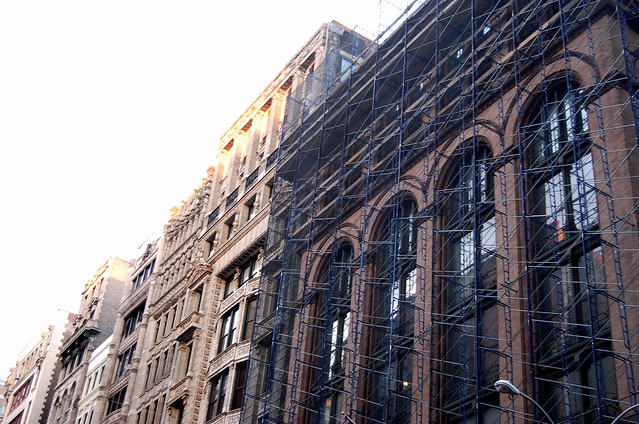
SoHo buildings' economic domino effect

I just read a super interesting article on Urban Omnibus -- Living Lofts: The Evolution of the Cast Iron District. This is one of those articles that I want to copy and paste in its entirety. Briefly: It talks about how SoHo's buildings have been used over time, and what effects they have had on the communities, laws, and overall transformation of the neighborhood throughout history.

Doesn't show as well in this photo.

This is one of my favorite parts, on artist lofts in the 1960s:

Many lofts remained empty for quite some time until artists began moving in to what had become a desolate, dirty, and dangerous area. These new residents lived illegally in raw industrial lofts they made habitable by installing bathrooms and taping plastic sheets over the windows to keep out the cold. Living conditions were often uncomfortable at best. The area was empty at night, the crime rate was high, and the streets were filthy, as there was no regular trash pickup. There were no schools or clinics, and no grocery stores or restaurants, save for a couple of diners open only for breakfast and lunch to serve the factory workers. It was a kind of no-man’s-land that even taxi drivers had trouble navigating. On the other hand, the small population and isolation from infrastructure and resources created a tight-knit community of residents. Everyone knew each other by name and looked after one other. Because there were so few public services, the community provided for themselves, opening restaurants for locals and forming community playgroups where neighbors often paid for goods and services with their time and involvement instead of cash.

After 1971, it was deemed legal for artists to live in the smaller lofts in SoHo (in two specific zones), which brought up an interesting set of criteria on what makes one an artist (awesome when law and philosophy meet, no?). It sounds like artists had to fill these out when applying to live in the neighborhood. When an artist applied to live in SoHo, their "commitment to [their] creative work" would be assessed.

1. A description of the artist’s work.

2. A description of the artist’s need for space.

3. A biographical sketch including data the artist feels is pertinent; education, professional training, public exhibitions or performances, reviews, or grants.

4. Other data. If the artist does not feel properly represented by 1, 2, or 3, above, he can: a) present documentation of his work in the form of slides, photographs or other data which will back up his commitment and space needs—but not his aesthetics, or b) ask a few members of the Committee to visit his studio or working space to discuss his situation.

5. The names of two people who are familiar with the artist’s work and who can testify to his commitment and his need for loft space.

It doesn't sound like this law has formally disappeared: "Every non-artist who moves into SoHo today could theoretically be told to move out unless he or she can prove artistic legitimacy, but the probability of that aspect of the law being enforced is low."

There were tugs of war between artist tenants and landlords, and various social shifts that over a couple of decades have turned SoHo into what it is today. The article glosses over the minutiae of how these "economic and social" shifts happened, which I'd be really interested to read more about. This paragraph should feel more familiar to anybody who's been to the area recently:

The change in the socio-economic makeup of SoHo residents brought with it commercial development. Art galleries began to move out of the neighborhood in the 1980s and 1990s, mostly to Chelsea where rents were more reasonable, and were replaced by high-end boutiques, restaurants, bars, and nightclubs. Nightlife destinations brought unwelcome street noise, and the SoHo Alliance fought hard against the issuing of new liquor licenses.

So good. Heading over to the writer's more permanent home, SoHo Memory Project, to see if I can find out more.

02 May 2013

ChimeO'Clock

Sometimes it's ok to make an app that is a little piece of beautiful candy. From an email I wrote UC this month:

It's starting to get nice out.

You probably still want to make more of an effort to get up and walk around more during the day, right?

Do you like pretty things.

I've been using this app that does nothing other than chime every hour, half hour, or quarter hour.

It reminds me to get up, shake the zombie out and let my brain unravel.

(And if you've ever played Portal, you'll appreciate the Voice option).

[ChimeO'Clock]

26 February 2013

Four lexical gustatory examples

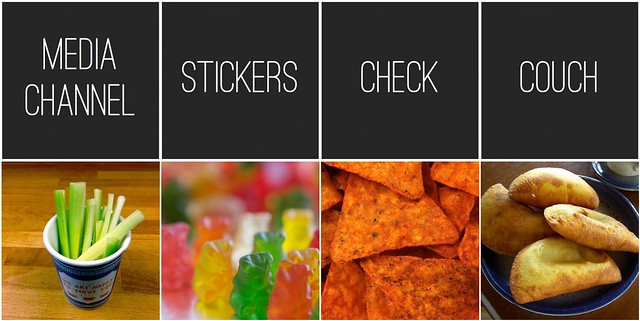
For anyone new to this blog or who doesn't know, I have two mild forms of synesthesia: sound color (I see colors when I hear certain sounds, notes or songs) and lexical gustatory (tasting certain things, or craving tastes, when I hear certain sounds or words) - I'm going to abbreviate this LG for now. The latter is much more fun, but as I said, they're both mild and don't surface that often. Well! Yesterday, I discovered a new LG synesthesia cue for me: the word "stickers" makes me taste and/or crave gummy candy. Neither the pearly kind nor the sour kind - the classic, transparent/jelly kind. I excitedly tweeted this, got into a mini conversation with Mikey Il about it, and then realized that sharing four of my lexical gustatory cues with you guys might be fun.

Lexical gustatory synesthesia

Media channel is celery. This one came up between 2 and 5 years ago. I'm thinking it was when I was still at Naked NY, since the nature of our work had us talking about media channels all the time. This is a very refreshing, crunchy pair of words for me.

Stickers is gummy candy. I have of course heard the word before, but for some reason when I read it out loud from an email yesterday, I flung up in my seat, ran to the kitchen, and ate a bunch of gummy Vitamin Cs and ginger chews. Every time I've uttered or heard the word since (I've been saying it a lot), I have the same sensation, taste, or craving.

Check is Doritos. Well, sort of. This one is fairly old, and I first remember it happening in middle school some time. It's not only the word check, but most words with a hard "ch" sound, and an "E" somewhere in the word. But the E has to be pronounceable. It can either be a short E, like in checkers, check, or Chester, or a long E, like in cheese, cheat, or cheek. Soft "ch" words don't count ("chenille" doesn't do anything for me in an LG way, for example, other than picturing a pile of cooked, blue-tinted glass noodles, but I'm not sure what that means either!? That literally just happened.).

Couch is my first LG cue ever, when I was about five years old. It happened while listening to a Teddy Ruxpin tape. There was one story where he and Grubby, and maybe some other characters were exploring the inside of a couch, and it was this big adventure. Every time Teddy Ruxpin said couch, I got this desire to eat something. But I couldn't figure out what, for years and years. Almost 20 years later, on the way to White Plains for a client meeting, a team I was on stopped to pick up lunch. The second I bit into my first-ever potato empanada, I yelled out loud, "OH MY GOD, IT'S COUCH!" I didn't realize this was due to a form of synesthesia yet, so it was a little awkward explaining what the hell I meant by my outburst.

Fun? Should I do more of these? Do any of you guys have any forms of synesthesia? Please tell me. I've never met or spoken to one before.

25 February 2013

Protecting the liquid gold.

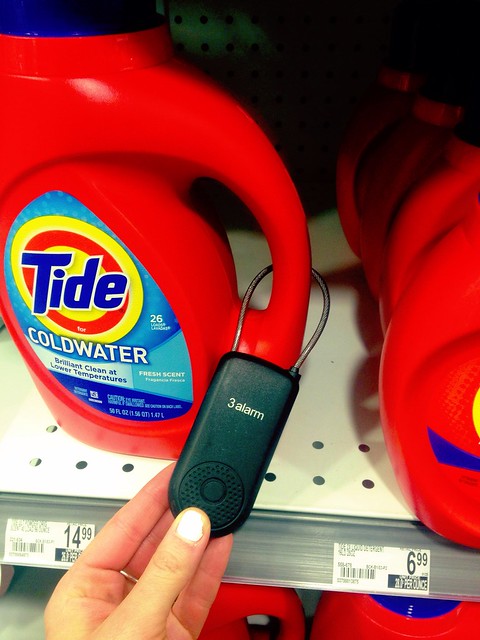
I had heard about the epidemic of Tide thefts over the past couple of weeks, but finally read this article about it. Really interesting to hear about both the psychological and social roots that have slowly led to this bizarre cultural phenomenon, and the economic ramifications of it. All that blended with a bit of new knowledge on inventory, stocking, reselling stolen product, and the rise of this mass theft resulting in part from keener analysis on risks and benefits. It all lingered in my mind by today, at best, until I was met with this at a local drugstore:

Tide security.

Derrick pointed out that this is leather-jacket-level security. I asked the associates about it as well; apparently the hardware is so new that they still fiddle with the plastic tools that unlock each bottle. Which reminded me of this paragraph:

For stores, stopping Tide shoplifting presents unique challenges. Most frequently stolen goods—GPS devices, smartphones, and other consumer electronics—are pricey, light, and easily concealed. They’re also not routine purchases, which means they can be locked up until buyers ask for them. Bulk goods like detergent are harder to run off with, but they’re also bought by dozens of customers daily—lock those products up, and a store manager adds more time to his customers’ errand runs, potentially sending them to shop elsewhere. “Any time you secure something, it impacts the sale of that item at some level,” says Jerry Biggs, the director of Walgreens’ Organized Retail Crime Division.
This reminds me of something I'd hear about on the Freakonomics podcast; remember the cobra effect?

23 February 2013

Some Wurtzel quotes.

Until tonight, I had never read anything by Elizabeth Wurtzel. Is that crazy? Is it bad? Should I be embarrassed? I feel like it is, and I should be.

I read this article in New York Magazine, and my evening went from a little listless to a tornado of underlining and ripping pages out and taping them together elsewhere. Assorteds --

Meanwhile, most people who think they are practicing law are actually making binders, and my guess is that most people who think they are doing whatever important thing they are doing are making binders. The binders from law firms go to a locker in a warehouse in a parking lot in an office park off an exit of a turnpike off a highway off an interstate in New Jersey, never to be looked at again. No one ever read them in the first place. But some client was billed for the hourly work.

The best lesson I have learned from David Boies is patience. He deposed Bill Gates for twenty hours to get the answer he needed, so David believes in time.

Even when you are picking out a dog, it has to be true love and not a list of pluses and minuses or a bunch of desirable traits you would describe on OkCupid. There is no substitute for magic. I have only ever known love at first sight, and I know it when I see it.

I am Potter Stewart wandering through an overwhelming emotional life that only makes sense on contact. It’s all pornography to me, all of life is so visually rich and it all hits me absolutely like flat sheets of hard rain so that the only feeling I trust is the one that comes down in a devastating way. When I meet people who tell me that they are immune to the power of beauty or that they don’t get overwhelmed by plain old lust, I don’t think they are lucky; I think they are missing all the fun. And all the pain, of course.

We would have coffee and paprika biscuits in bed on Wednesday mornings.

The list of things I can’t be bothered with goes on forever. The list of things that bother me goes on forever.

Now, in a whole long day of croissants in the morning and multiple dog walks and stops at the bodega for yogurt and jam, I may speak with people I care about only in type.

I already know that the article will make some people roll their eyes, and, reading the first dozen or so comments, have seen even more - disgust, contempt, offense, and all out wars between commenters. As I read, I was in some inner part of my brain, and was only reading the words and visualizing it all. When I wake up and pull myself outward a little, it does seem to be a paradoxical blend of consciously describing being in the moment and all the way at the F extreme of the F/T continuum, and being at a high enough perspective to also consciously point out the shortcomings of a life led with intention, planning, and within a social construct of sorts. ANYWAY.

17 February 2013

Hacking the block lamp

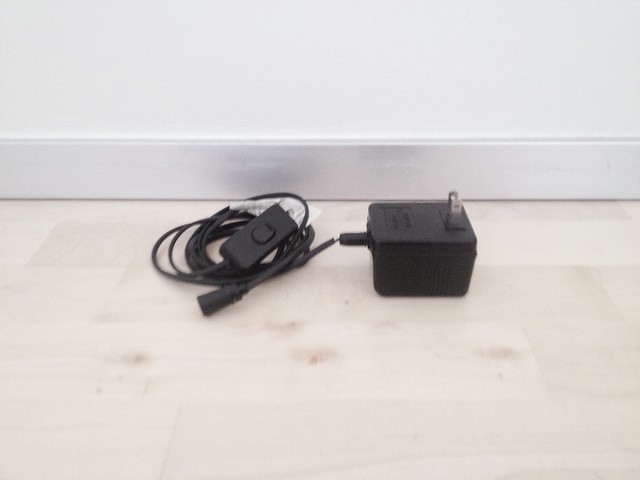
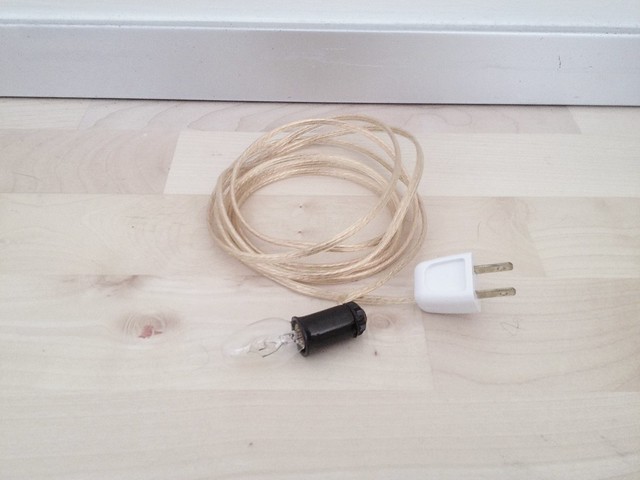
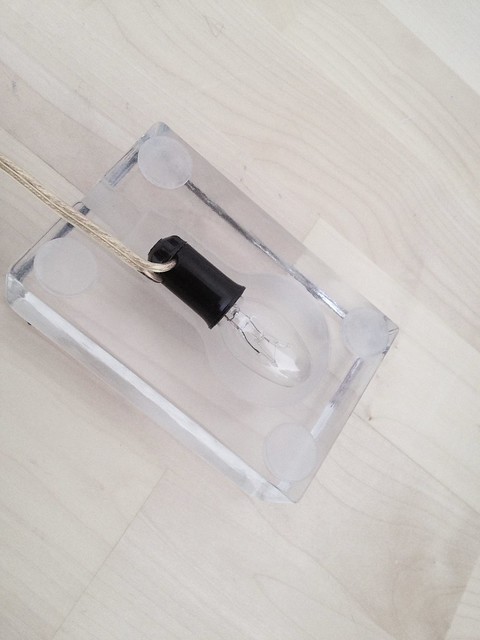
I got one of these Design House Stockholm block lamps four years ago; for three of those years, it sat in pieces in a corner. Once the bulb burned out (or I knocked the filament loose, oops), I could not for the life of me find a replacement – the website suggested a 25W candelabra, but none that I could find would either a) fit into the glass encasement, or b) fit into the strangely small barrel of the cord. It befuddled associates across a few hardware stores.

photo 1

Finally, we got fed up and decided to scrap the original cord entirely and build a new one.

photo 3

photo 4

We made this with a 7W candelabra bulb, seven feet of lamp wire, a two prong male plug, and a bulb barrel socket screw thingie. I also picked up a pack of vinyl bumpers (replacing the originals that had fallen off over time), to keep the glass from sliding around and chipping.

photo 1

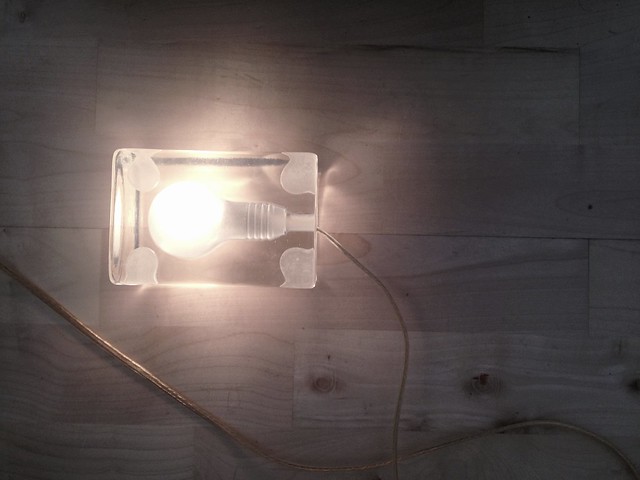
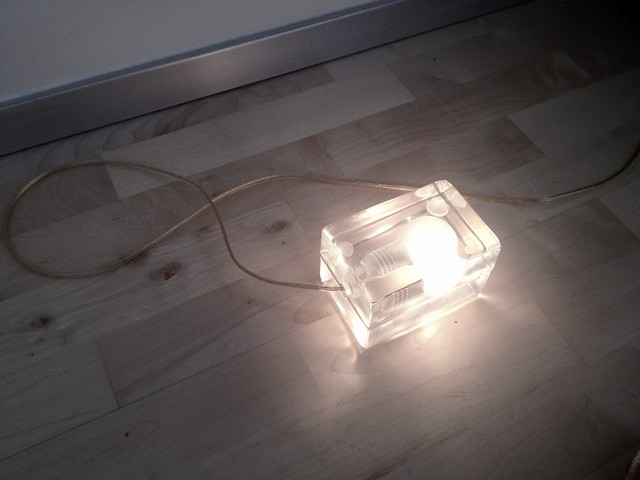
We're not quite done yet; right now you can only turn it on by plugging it into the wall. We bought one of those wheel click switch things to add, but further decisions will wait for another weekend. For now…

photo 2

…let there be light.

26 January 2013

cellar door, you're seven!

Heard this morning on a recent episode of Radiolab:

Bliss is the taste of hot pastrami
at Katz's Deli in the Lower East Side
of New York City.

My blog turned seven today. I had a longer, more swirling-in-my-head post written out, but I think I just want to say…

:)

Hell yes.

05 January 2013

On Oliver Sacks

If you have ever been a fan of Oliver Sacks, give this New York Magazine article from November a read. It's a short and sweet look into him as a person, featuring stories from his childhood, personality, passions, focus, and life. It's full of little snippets that I loved, including the phrase neurological marbles. Here are two more:

"The great moment of his genius was not giving those people the drugs; it was walking into that home for the incurable, that warehouse, and having the moral audacity to imagine that some of those patients were different from the other ones and that they were in fact alive."

We may be our brains, he wanted to say, but we also shape them as we backpack through the world with all our trinket-y neuroses.

For your introspective Saturday night.

01 January 2013

Project 366: December + reflections.

Project 366. This was technically my biggest photography project ever, though the stress was much lower than some other ones I've done - it was just prolonged over a very long time. For anyone who doesn't know, it's usually called Project 365, and involves taking one picture a day for a year (2012 was a leap year).

I won't get too involved in reflections, because they're similar to those of most people who do one of these. It's not for the faint of heart, but can be easy if you are the type to take pictures all the time anyway, and always have your camera on hand. I myself used my iPhone exclusively for this, sometimes subbing in Instagram pictures or Picframe-created ones when I lost the original copies before uploading. I've been thinking of turning the photos into a book and giving it to my parents, since we don't live in the same place and it might be nice for them to read about the smaller things I notice and think about.

Ok, let's see what December looked like!

Project 366: December

My favorite:

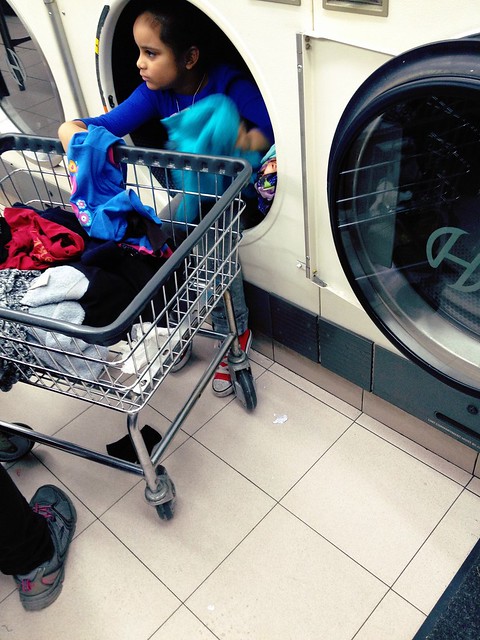
344/366: laundry helper

344/366: laundry helper

9 December 2012

Slightly blurry. Most pictures I try to take quickly so people don't notice and things don't get awkward turn out blurry.

This was really cute to see during my least favorite thing to do in the world: laundry. For non New Yorkers: Having a washer/dryer in your apartment is a rare luxury. It is at the top of my list for my next apartment hunt, since I hate traveling to do it so much that weeks go by between laundromat visits, making the 10 block trek each way that much heavier and more terrible.

Other December highlights: Saw The Faint in concert, which was my favorite show of the year. Bought another ring from The Great Frog. Started building a portable iPhone charger. Saw a flock of sheep on Bond Street. Saw a bunch of decorated Christmas houses. Spent a good long time with family for the holidays.

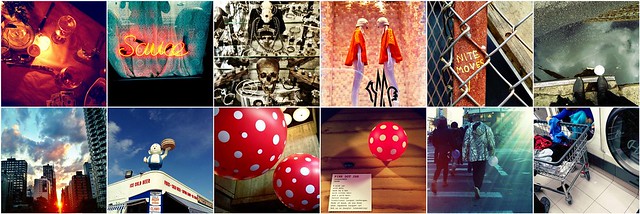
Anyway, there you have it! Here are all of my favorite photos of each month, together, to take the place of my usual "year in pictures" -

Project 366 highlights

Feel free to peruse the Flickr set of the project, or read about each month here.

Oh, and happy 2013. If you're feeling adventurous, do one of these! You still have 12 hours to start, if you're on the East Coast.

30 December 2012

What I listened to in 2012.

Looking at my Last.fm charts is one of my favorite things to do - especially at the end of a year. Even though I know what I listened to (because, well, I listened to it), there are always some surprises that come from near-comprehensive data aggregation. If you had asked me what I listened to the most in 2012, I would have said new wave - I had my Depeche Mode Pandora station on almost every single day. But: That stuff wasn't aggregated. Only one related artist made it on - I guess when I'm deliberate about an artist or album, things turn out a bit differently. Maybe it's because that Pandora station perfectly captures the aesthetic, memory, or gestalt of some intangible thing that can only be accurately presented as a collection of songs. Anyway, here they are: my top 10 listened-tos of the year.
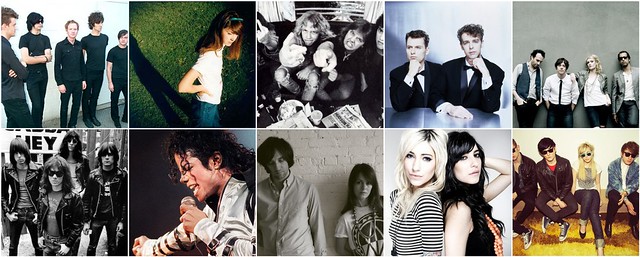
Top music of 2012

10. Two Wounded Birds. This was solely based on their song I Think The World Of You, which I heard playing in TopShop over the summer. It is the most beautiful epitome of moody Brit surf you will probably ever hear.

09. The Veronicas. This one really surprised me. I only play two of their songs, but I play one of them to absolute death. It's called 4ever, and is probably one of their more popular ones. I don't know much about these girls, except that this song was the theme of one of the most fun nights I had in grad school, involving my friend Carrie, wigs, a new bar, cherry vodka, sweater creatures, and the sound of McDonald's wrapper crinkling in the depths of my half-asleep consciousness as the sun rose.

08. The Hundred In The Hands. They came out with a new album this year I believe, but I still couldn't stop listening to their previous one. So moody and good.

07. Michael Jackson. What a surprise! He surprised me last year as well.

06. The Ramones. I got really into Bowery history this year, which had me tearing through dozens and dozens of Ramones tracks. I also bought a black motorcycle jacket at around this time a year ago, which drove me to them even more.

05. Metric. Surprise, surprise. I think they're still my top listened-to artist since I opened my Last.fm account in 2006.

04. Pet Shop Boys. I was introduced to some really stellar tracks of theirs through that Depeche Mode Pandora station, and I had those on repeat many a day.

03. Metallica. My favorite band of all time, which may sound weird to some but make perfect sense to others. This year, Orion was on heaviest rotation. If you're ever in a bad mood and have to go walk somewhere, put this on.

02. April March. My favorite discovery of the year. In 2010, I became totally obsessed with yé-yé. A friend spun her English version of Laisse Tomber Les Filles (Chick Habit) at a metal bar one night (I don't know, it worked), and I was hooked. I know it was in a Tarantino movie, but I have yet to see it. Chick Habit (the song and album) got the most plays of the summer. It's fantastic. Also fun fact: She was once an animator for Ren & Stimpy. What.

01. The Faint. They came back in a big way this year for me. This is the band that has probably made the most songs that I have played on repeat for hours and days, dancing around like an idiot. (Exhibits A, B, C, and D).

For more cowbell:
What I listened to in 2011 (blog post)
What I listened to in 2010 (Flickr)
What I listened to in 2009 (Flickr)

29 December 2012

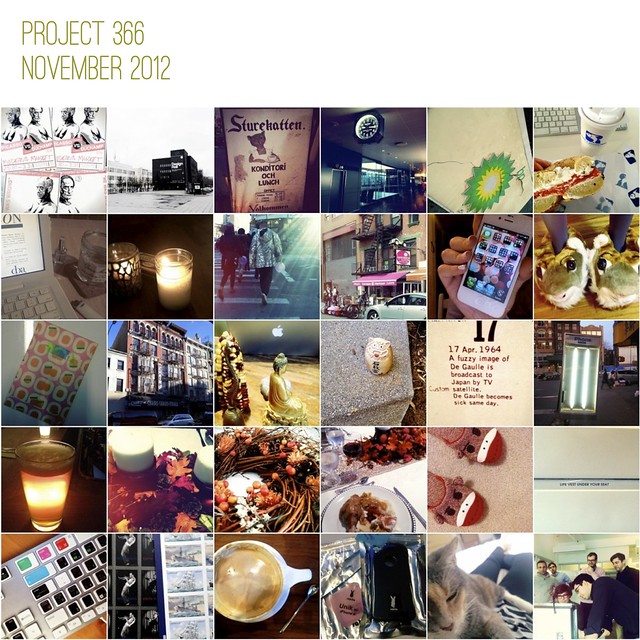
Project 366: November

Well, it's after Christmas and I'm only getting around to this. Good one. ANYWAY. We only have one more month to go after this. Holy crap. Here's November --

Project 366: November

Here's my favorite shot:

314/366: balloons.

314/366: balloons.

9 November 2012

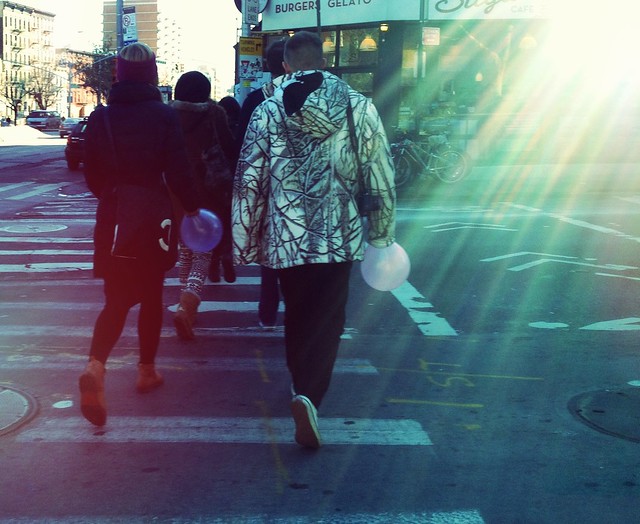
Saw a group of four friends strolling down the street this today, each carrying a different color balloon.

I was happy with that picture because the scene of a group of very cool looking people holding balloons made me smile, and I was basically crossing busy streets while taking pictures and trying to be discreet. And it came out, with happy sun rays in the corner and nobody being hit by a car.

Some other highlights: Began the month in Stockholm. Voted. Shattered my phone's display. Bought tiger slippers. Sent some snail mail. Went to Los Angeles again. Had a lovely family Thanksgiving. Went to Chicago. Got a case so my iPhone wouldn't shatter even more.

Not that eventful, other than the 4 flights I took ;)

18 December 2012

MintyBoost, part 1

I am building someone a portable iPhone charger for Christmas. It's called a MintyBoost, and you can buy the kit on Adafruit here. (It's a really good electronics project for beginners).

Here's where I am so far:

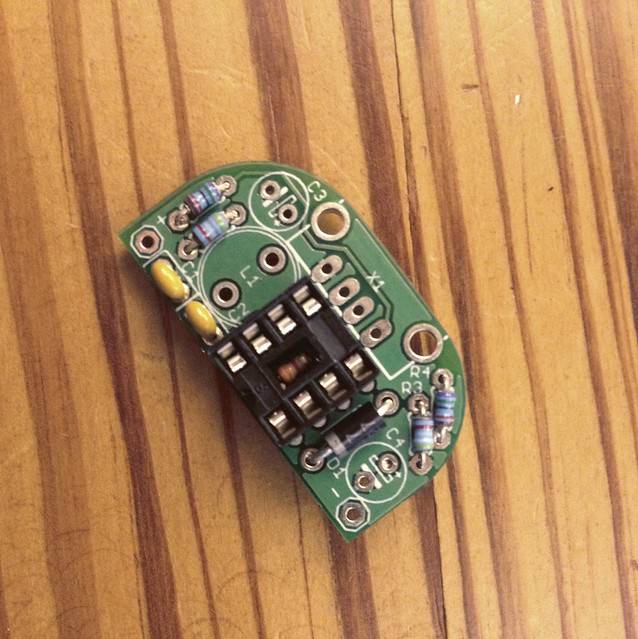
353/366: mid MintyBoost

I had to stop halfway through, because 1) I had to run into a meeting, and 2) I screwed up. I've had this problem my whole life - getting into a zone and jumping ahead of myself before reading all of the directions thoroughly, or skipping a step/overdoing it as a result. I soldered the diode (that black barrel toward the bottom-right) in upside down. Now I have to go out and buy desoldering braid to fix the thing.

Aside: Desoldering braid is hypnotizing. You put it over your screwup, put a soldering iron on it, and the braid sucks up the solder, essentially ungluing metal. So cool.

Hopefully the next time you hear from me on this, I'll have a working (AA battery powered, how cool is that?!) USB charger. To be continued…

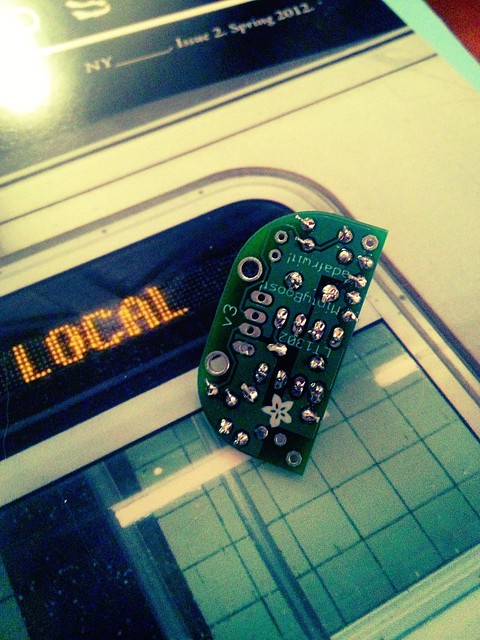
EDIT: A request from Bud to see my soldering job --

MintyBoost progress, back

(I'm usually a messy solderer; this is a new iron so it may just be a good one!)

Related Posts Plugin for WordPress, Blogger...