Last week, Flavorpill posted a ~20 video on their blog (in two parts) on the psychology behind the impossible set design of The Shining, created by a guy named Rob Ager.
I was fascinated, watched the whole way through, and found myself then reading the text version of the analysis, which is really, really long (currently at 21 chapters). It attempts to parse all of the subliminal messages, themes and symbolism that he thinks run rampant in the movie. Covered are child molestation, alcoholism, secret societies, duality, genocide, animals, cartoons, and a bunch of others. Everything is tied together in a pretty engrossing package. There were definitely times when I thought the author was reaching for straws (he even says, "Before we move on to the next chapter, if you’re not familiar with a lot of the conspiracy theories discussed here then you may well be jumping to a 'Rob’s a bit of a nutter' conclusion" at one point, which made me laugh). At other times, though, the analysis was pretty hard to argue with, which led to a new respect and interest in Stanley Kubrick that I've not had before (I admittedly don't really pay attention to directors). There are ties drawn to Kubrick's other movies, to the making-of documentary of The Shining and its role in the movie's symbolism, and even the dynamics between him and the actors on set.
I guess it's no surprise that I liked reading this thing: what got me into Art History many years ago was a museum tour that took me through some of the hidden meanings and imagery in Salvador Dalí's paintings. I really like the stories behind things – especially the ones that reveal stuff that is right in front of you and you don't consciously realize are there.
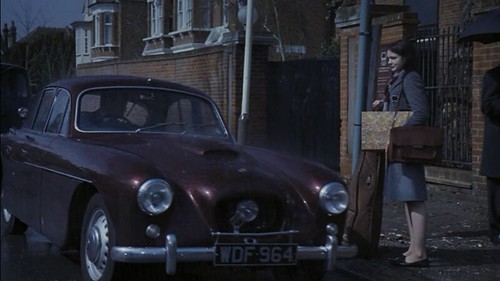
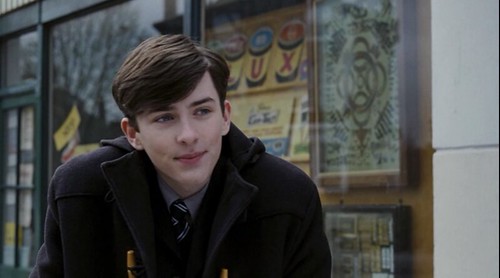
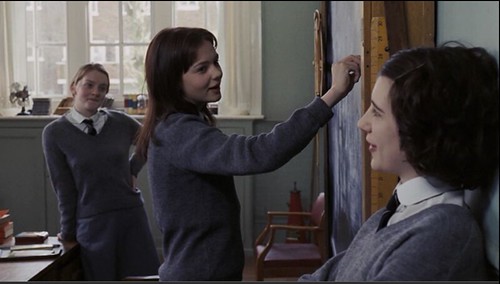
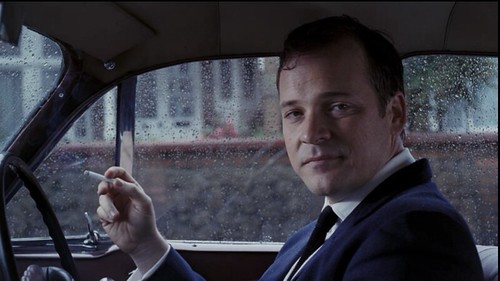
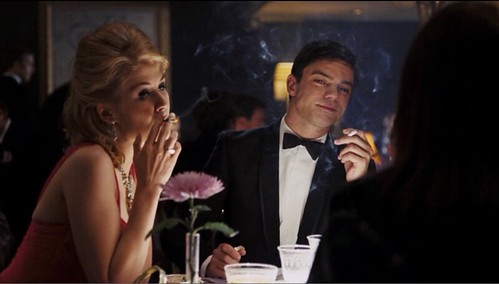
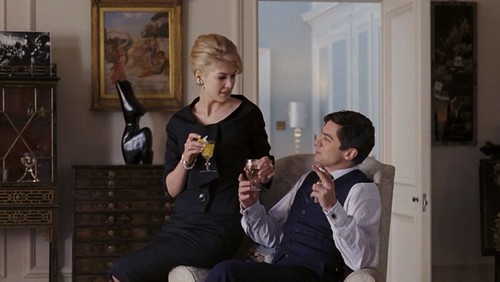
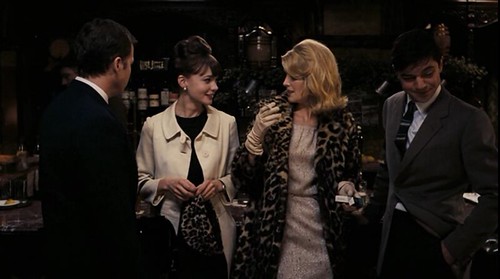
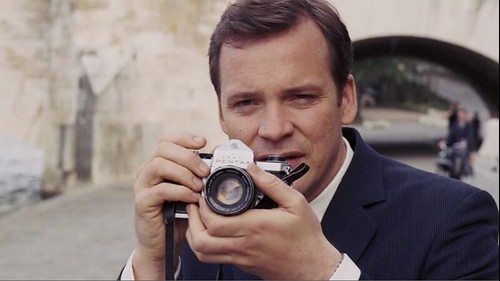
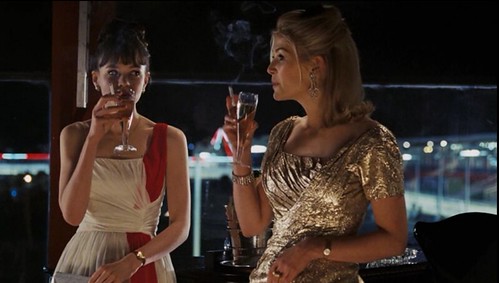
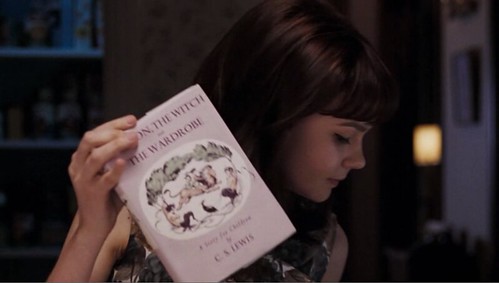
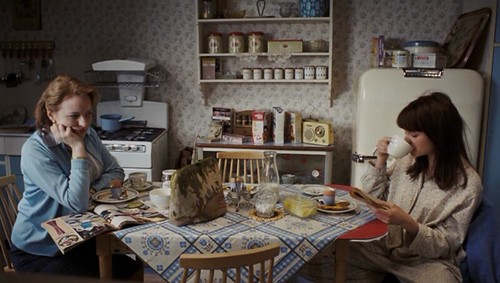
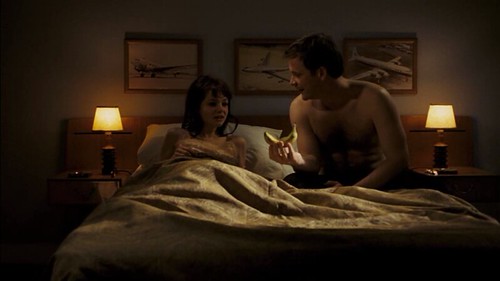
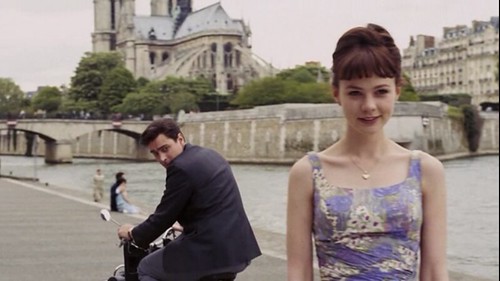
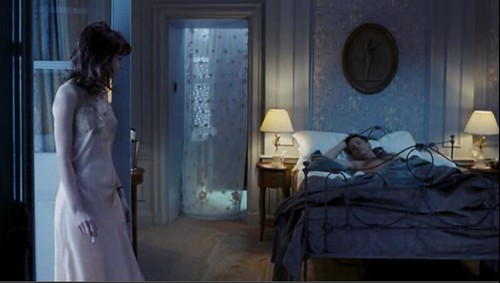
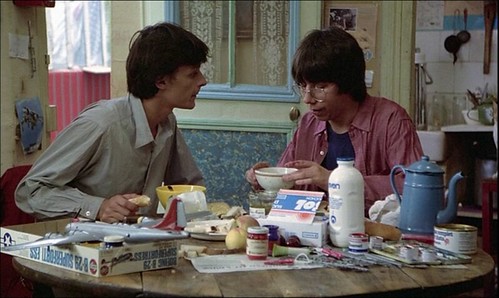
I watched An Education yesterday, which had been on my Instant Queue for quite a while. It was pretty great, and every time something like this happens, I marvel at the fact that I had been sitting on such a delight for so long without knowing it.
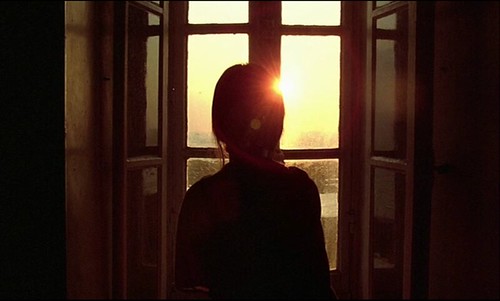
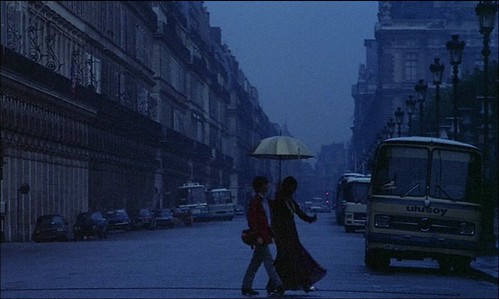
As you can probably tell, the movie is about a school girl in the 1960s who is cynical about what a traditional education all means - she'd rather learn about life by living than by reading textbooks. I won't get into details on the rest; just see it. The story is heartfelt, exciting, and shot beautifully – I took a million screenshots and couldn't prioritize or stop, really. They triggered all kinds of different memories and associations in my head. How I imagine English, 1960s style, Marisa (who writes the fantastic The Significant Other), and current Swedish girl blogger culture (see this, this, and this for examples), mostly. This might crash your browser (unless... does that happen anymore?).
I just read an article in Wired called Second Coming, which tells the story of how James Cameron's new movie Avatar came to be. It covers daydreaming about it in 1977 all the way to today (the movie comes out next Friday 18th). The article explains why Cameron seemed to disappear completely after Titanic came out (we haven't seen anything from him in 12 years): he wanted the alien world and its characters to be so realistic that he actually waited for technology to catch up with his visions. Hardware was also behind – a camera that excelled in shooting in both 2D and 3D filming didn't exist yet. He flew all the way to Tokyo with a partner to pitch a new camera technology of this caliber to Sony, and they agreed to produce it. Then he had to convince the movie theatre industry to upgrade theatres all over the country to support screening this new filming technology. It goes on and on, and ends with Fox giving Cameron $250 million for the project. My favorite parts were on the last page, and talked about the excruciating detail that went into dreaming up this fantasy planet called Pandora:
He started by hiring USC linguistic expert Paul Frommer to invent an entirely new language for the Na’vi, the blue-skinned natives of Pandora. Frommer came on board in August 2005 and began by asking Cameron what he wanted the language to sound like? Did he want clicks and guttural sounds or something involving varying tones? To narrow the options, Frommer turned on a microphone and recorded a handful of samples for Cameron.
The director liked ejective consonants, a popping utterance that vaguely resembles choking. Frommer locked down a “sound palette” and started developing the language’s basic grammatical structure. Cameron had opinions on whether the modifier in a compound word should come first or last (first) and helped establish a rule regarding the nature of nouns. It took months to create the grammar alone. “He’s a very intense guy,” Frommer says. “He didn’t just tell me to build a language from scratch. He actually wanted to discuss points of grammar.”
Amazing. Check out this mini "making-of" clip:
Here's some stuff about the planet's plant ecosystem:
[...] Cameron hired Jodie Holt, chair of UC Riverside’s botany and plant sciences department, to write detailed scientific descriptions of dozens of plants he had created. She spent five weeks explaining how the flora of Pandora could glow with bioluminescence and have magnetic properties. When she was done, Cameron helped arrange the entries into a formal taxonomy.
WOW. I would love to hang out with someone with such an insane imagination and tenacious attention to detail. This is just the tip of the iceberg, too – Cameron even had Pandora's atmospheric density calculated. Are you going to see this movie? I'm not that big on this type of science fiction, but I might have to be now.
One of my favorite parts of the Internet is how hard it is to miss something wonderful if you're really into its subject matter. Here is a tiny account of how I found out (and was reminded, and was reminded again) about TOKYO! (the movie):
Pretty awesome, right? Over six months, I had messages about the movie coming from a blog, a friend and a mailing list. By the time the movie opened, there was no way I was going to forget about it. And how could I, with a trailer like this?
Last weekend, I finally saw it with Jack and I loved it. This is one I'm going to have to buy when it's released; I can see myself wanting to watch little bits of it over and over again.
In short: The movie is three separate stories – all set in Tokyo – directed by Michel Gondry, Leos Carax and Bong Joon-Ho. I loved each one for different reasons. There were a lot of "everyday adjustments when you're new to a big city" parts in Gondry's, the feelings of which I can remember/relate to. Also, one of my favorite buildings has a tiny cameo in it.
The Carax story was slightly jarring and hilarious at the same time; it starred Denis Lavant, who nobody ever seems to be able to take their eyes off of (here he is in the Rabbit in Your Headlights video). The Joon-Ho story not only referenced hikikomori... but it also had a TON of sunlight in it, which is one of my favorite things in the world to look at.
I really am happy that I enjoyed Tokyo! this much, because I accidentally read a withering review of it a few days beforehand that ashamedly had me spooked (don't click on that unless you are okay with spoilers): Tokyo! has no real reason for being, least of all as a city portrait. It’s disposable art-house tourism, made by filmmakers with too many festivals to attend. Wowzers! Seeing this movie reminded me why I tend to take such things with a grain of salt, since it's hard to apply the opinion of someone I've never met to the context of my own life.*
I realize that this post doesn't really have a clear flow. Sorry. These are the two separate thoughts that aren't SO separate in my mind but I'm having a hard time explaining (try to poke holes in these if you can, I don't feel 100% yet):
1. The Internet is a great platform for guiding you to things you love: either directly (something you signed up for, e.g.), or via someone else who knows you pretty well. DUH, I know, but I'm just thinking about this now. 2. The more paths that something takes to get to you, the more support there is that you should probably check it out further. These paths are in a way pre-selected and shaped by "what makes you you," right? So all of them taken together are a better predictor of whether or not you'll like it than someone who's paid to write reviews that stand on their own or in a silo. Again, common sense, but I liked deconstructing it a little.
* I think of this in the same way that I think of professional restaurant reviews (I wrote this as a comment in Noah's post about rating systems & personal rules). One of the reasons I prefer public rating systems over things like Michelin is context. Restaurants don't live in a vacuum: they are part of people's lives. On Yelp, you can look at profiles attached to each review to get a general sense of the context in which the review was written. You can also look at the other reviews that that person has written (and what they wrote them for), and get a general gauge of how the restaurants (or shops) play a part in their everyday lives, their particular tastes, their "aesthetic" (gross but true), etc. Yakitori Taisho is not on Michelin's NYC Stars 2009, but it would be on mine because of who I am.
About a year ago, Paul told me that I had to see the movie Diva. He got so enthusiastic when describing it that I knew I had to put it in my queue. Well, this was before I re-signed up for Netflix, so I half forgot about it. I finally got around to renting the movie last week, and now I understand why he was so enthusiastic.
IMDB gave a pretty good rundown, so here it is: Two tapes, two Parisian mob killers, one corrupt policeman, an opera fan, a teenage thief, and the coolest philosopher ever filmed. All these characters twist their way through an intricate and stylish French language thriller.
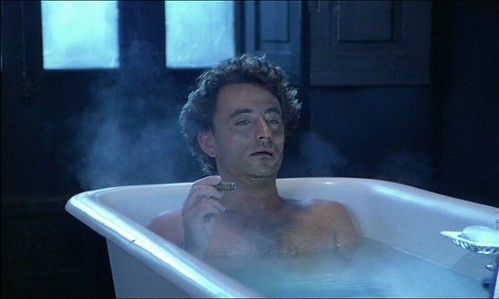
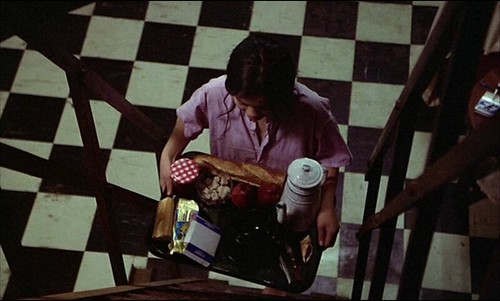
Sound confusing? Well, it was, a tiny bit. But aside from being a good thriller, the imagery is so beautiful. It was my favorite part of the movie. And taking full-size screen shots showed the graininess of the film more (which I didn't notice on my lousy television set); delicious.
I watched a short six-minute interview with director Jean-Jacques Beineix afterward; he said that it felt like he made two movies for the price of one. Apparently when it first came out, critics trashed it saying that he was too grandiose (maybe because scenes include things like a young girl rollerskating around a huge loft that is empty except for a big jigsaw puzzle-in-progress and a claw-footed bathtub; and a police /moped chase through the Paris transit system).
It wasn't only the critics, either: In nearly a year, only 100,000 people in Paris went to go see it. After that, though, some switch went off in people's heads and they went nuts for the movie, closing that year-long run with 1 million views. Wow!! Maybe people all of a sudden got into an artsy mood? Who knows, but that's just awesome. I just can't see that happening today, and Beineix said that it definitely couldn't (mostly because economics wouldn't allow for it).
Now that I'm on the topic of then vs. now, I was flabbergasted when I saw that Diva was released in 1981. The movie is timeless, and I wouldn't have suspected that it was older than me at all (except for the female detective's hair).
I highly recommend Diva, and should probably take Paul's movie advice more often. Go see it! Even if it takes you a year.